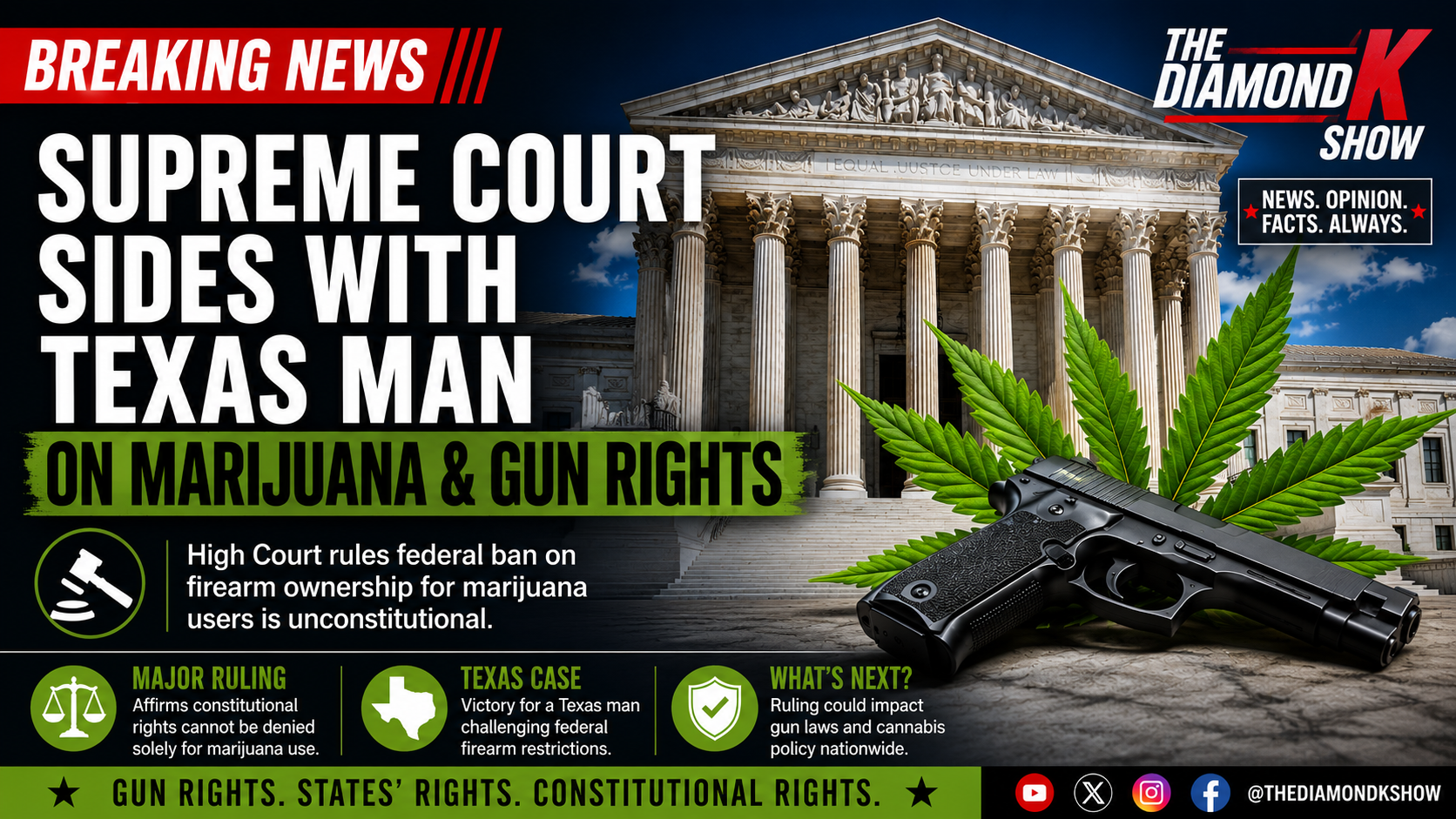
The debate over gun rights in America took another significant turn this week as the U.S. Supreme Court sided with a Texas man challenging federal restrictions that prohibit marijuana users from possessing firearms.
At the center of the case is a question that has become increasingly relevant as more states legalize cannabis: Can someone legally use marijuana under state law and still be denied their Second Amendment rights under federal law?
The Court’s decision is being viewed as a major victory by gun rights advocates and a potential challenge to long-standing federal regulations that have treated marijuana users differently from other Americans seeking to exercise their constitutional right to own firearms.
The Growing Conflict Between State and Federal Law
One of the most complicated aspects of marijuana legalization is that cannabis remains illegal under federal law, even though many states now allow its medical or recreational use.
This has created a legal contradiction. Millions of Americans can purchase marijuana legally under their state’s laws while simultaneously being considered unlawful users of a controlled substance under federal regulations.
For years, federal law has prohibited individuals who use illegal drugs from possessing firearms. Critics of that policy have argued that it unfairly penalizes marijuana users, particularly in states where cannabis use is legal and regulated.
Supporters of the restriction contend that drug use can impair judgment and create public safety concerns, making firearm ownership more dangerous.
A Constitutional Question
The case ultimately came down to constitutional principles.
Supporters of the Texas man’s challenge argued that the government cannot automatically strip someone of a constitutional right without demonstrating a historical basis for doing so. They contend that marijuana use alone should not be enough to justify denying firearm ownership.
The Supreme Court’s ruling reflects the broader judicial trend of closely examining firearm restrictions through the lens of the Second Amendment and constitutional history.
The decision does not necessarily resolve every legal question involving marijuana and firearms, but it does signal that courts may be increasingly skeptical of broad restrictions that affect constitutional rights.
What Happens Next?
The ruling is expected to have ripple effects across the country.
Lawmakers, gun rights organizations, cannabis advocates, and legal scholars will all be examining how the decision impacts future challenges to federal firearm regulations.
The case also highlights the growing pressure on Congress to address the disconnect between state marijuana legalization efforts and federal drug laws. As more Americans gain legal access to cannabis, conflicts between state policies and federal regulations are likely to become even more common.
The Bigger Picture
Regardless of where one stands on marijuana legalization or gun ownership, the case underscores a larger issue: how America balances individual freedoms with public safety concerns.
The Supreme Court’s decision is about more than marijuana and firearms. It is part of an ongoing national conversation about constitutional rights, federal authority, and how laws evolve as society changes.
The debate is far from over. But one thing is certain: this ruling will be cited in legal arguments, political debates, and policy discussions for years to come.
What do you think? Should marijuana users be allowed to legally own firearms, or should federal restrictions remain in place? Share your thoughts in the comments.