The United States has reached a milestone that public health experts hoped would never happen again.
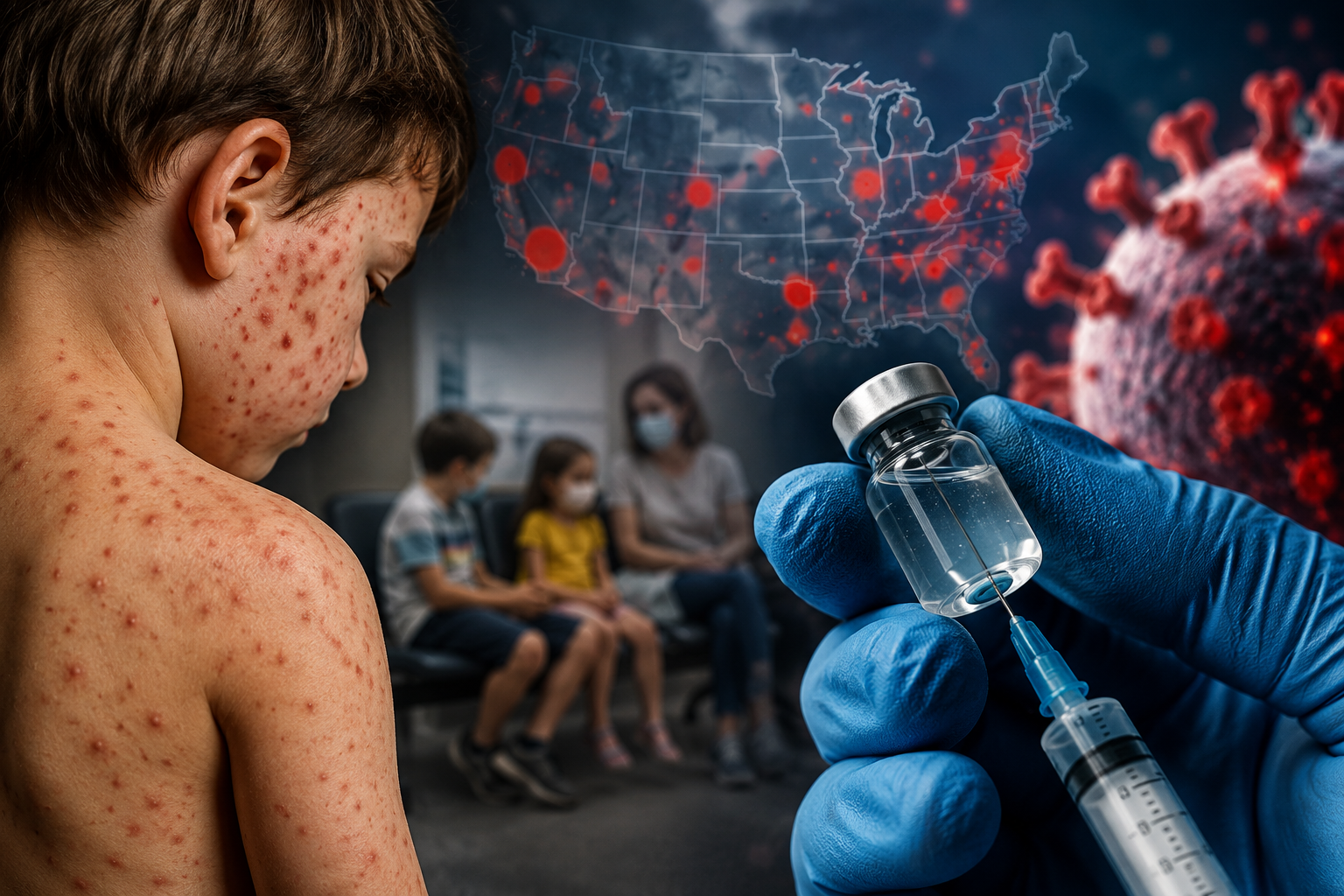
More than 2,300 measles cases have already been confirmed in 2026, making this the worst year for the disease since 1991. The troubling part isn’t just the number—it’s that we’re only halfway through the year.
For decades, measles was considered a disease America had largely defeated. In 2000, the United States declared measles eliminated, meaning there was no continuous spread of the virus within the country. That achievement was the result of widespread vaccination and decades of public health work.
Now, that progress is being undone.
According to the Centers for Disease Control and Prevention (CDC), more than 90 percent of this year’s measles cases are linked to outbreaks. Most infections have occurred among people who were either unvaccinated or whose vaccination status is unknown. Children and teenagers account for the majority of confirmed cases, and more than 150 people have been hospitalized.
Measles isn’t simply a childhood rash.
It is one of the most contagious viruses known to medicine. The illness typically begins with a high fever, cough, runny nose and red eyes before developing into the signature rash. For some patients—especially young children—it can lead to pneumonia, brain swelling, permanent complications and even death.
The MMR vaccine, which protects against measles, mumps and rubella, has been used safely for decades. Two doses are about 97 percent effective at preventing measles.
Yet vaccination rates have steadily declined in many communities. National kindergarten vaccination coverage has dropped below the level public health experts say is generally needed to prevent sustained outbreaks. That decline has created pockets of vulnerable populations where the virus can spread rapidly once it is introduced.
The resurgence of measles is more than a medical story—it is a reflection of how misinformation, political polarization and declining trust in institutions can have real-world consequences.
People have every right to ask questions about healthcare decisions. But those questions deserve answers grounded in credible scientific evidence rather than social media rumors or political rhetoric.
This outbreak also serves as a reminder that public health victories are not permanent. Diseases that were once under control can return if communities let their guard down.
Whether someone views vaccination as a personal choice or a public responsibility, the numbers are impossible to ignore. America has reached its highest measles case count in 35 years, and there are still months left in 2026.
History shows what happens when vaccination rates fall. The question now is whether the country is willing to learn from that history before this record becomes even more alarming.
One thing is certain: measles should not be making headlines in America in 2026.
Yet here we are.