
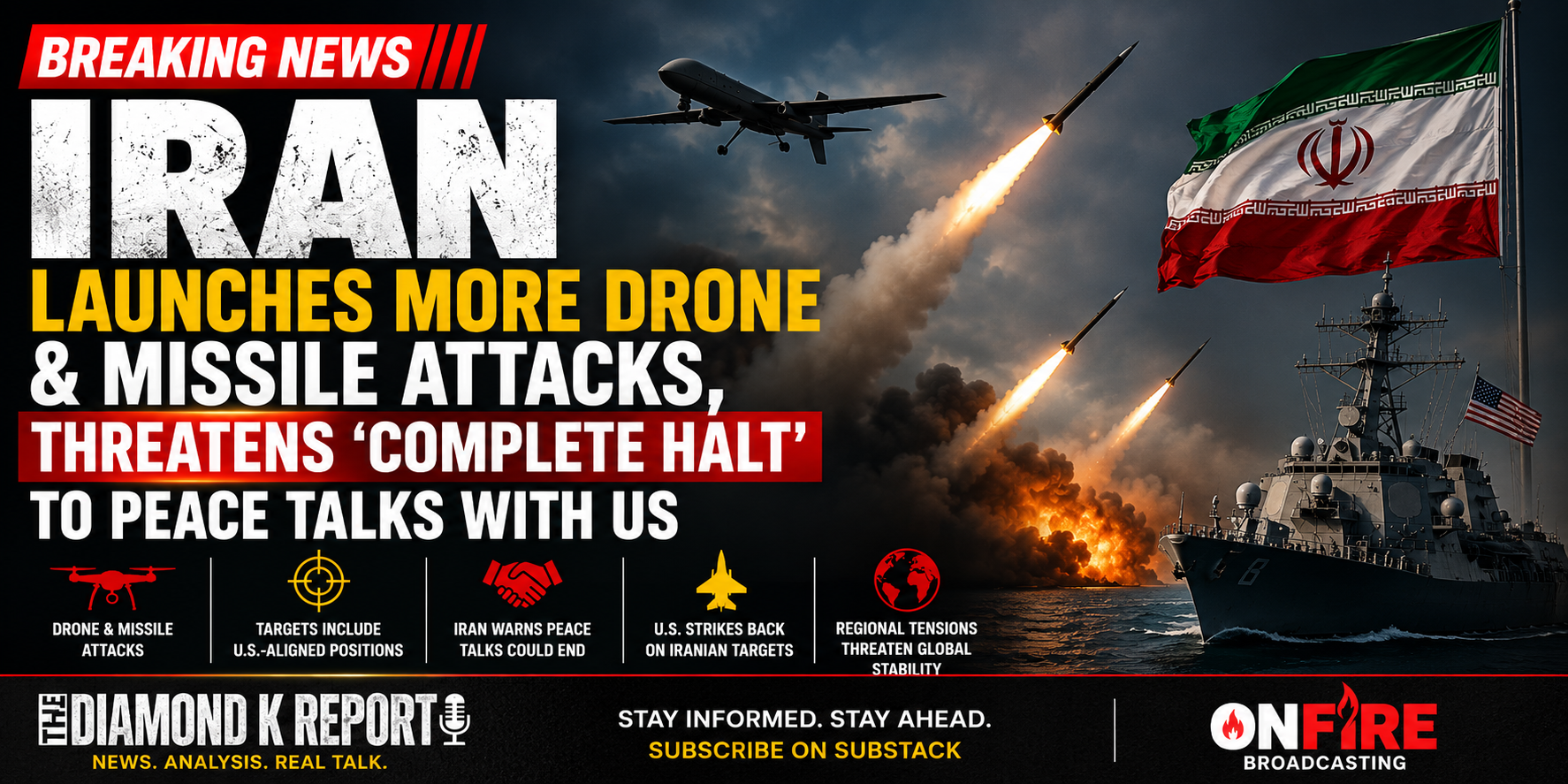
The conflict between the United States and Iran has entered another dangerous phase.
Iran has launched another wave of drone and missile attacks while warning that it may bring ongoing peace negotiations with the United States to a “complete halt” if military operations against Iranian targets continue.
The latest developments come after renewed U.S. military strikes targeting Iranian military infrastructure, continuing a cycle of retaliation that has heightened fears of a broader regional conflict.
A Dangerous Escalation
Military officials reported additional drone and missile launches targeting areas that host U.S. military forces in the Persian Gulf region. While air defense systems intercepted many of the incoming threats, the attacks underscore Iran’s willingness to continue military operations despite diplomatic efforts.
Iranian officials have argued that continued U.S. military action leaves little room for meaningful negotiations, warning that further strikes could effectively end the current diplomatic process.
The Biden administration is no longer in office, and President Donald Trump has maintained that the United States will respond decisively to attacks against American personnel or interests.
Why Peace Talks Matter
Although the United States and Iran have remained adversaries for decades, diplomatic negotiations have periodically served as a mechanism to reduce military tensions and prevent wider conflict.
If those discussions collapse entirely, the chances of miscalculation increase significantly.
Without diplomatic communication, military responses become the primary form of interaction between both governments—a scenario many international security experts view as highly unstable.
Global Economic Concerns
The renewed conflict also carries significant economic implications.
The Strait of Hormuz remains one of the world’s most important maritime chokepoints, with roughly one-fifth of global petroleum shipments passing through the narrow waterway.
Any disruption to shipping could lead to:
- Higher gasoline prices
- Increased shipping costs
- Greater inflationary pressure
- Volatility in global financial markets
Even the perception of instability in the region has historically been enough to move energy markets.
What Happens Next?
Despite the increasingly hostile rhetoric, diplomatic channels have not completely closed.
Officials from multiple countries continue urging restraint, hoping negotiations can resume before the conflict expands further.
The coming days may determine whether both sides return to diplomacy or continue down a path of military escalation that could draw additional nations into the crisis.
For now, the situation remains fluid, with military operations continuing alongside uncertain diplomatic efforts.
The Bottom Line
Iran’s latest drone and missile attacks represent another significant escalation in an already volatile conflict.
Whether peace talks survive may depend less on public statements and more on what happens militarily over the next several days.
As both nations continue signaling strength while leaving the door to diplomacy slightly open, the risk of a wider regional confrontation remains very real.
What do you think?
Can diplomacy still prevent a broader conflict between the United States and Iran, or has the opportunity for meaningful negotiations already passed?
Share your thoughts in the comments below.