
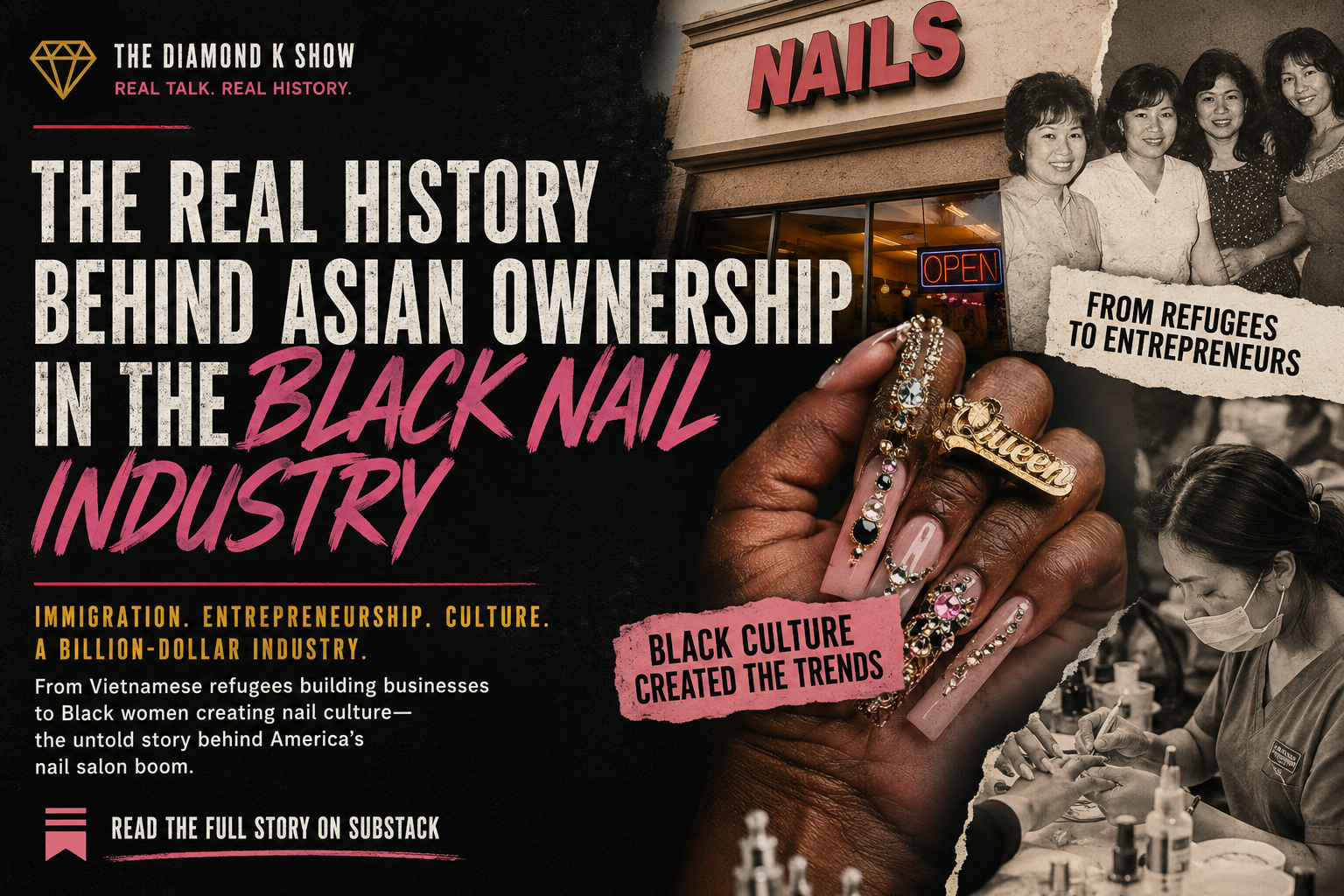
The history is deeper than the stereotype and more complicated than “Asians took over.” What happened was a mix of immigration, economics, beauty culture, entrepreneurship, and gaps in access to capital.
After the fall of Saigon in 1975, many Vietnamese refugees came to the United States with limited English skills and limited job opportunities. Actress Tippi Hedren helped train a group of Vietnamese refugee women in manicuring in California, helping launch what became a massive Vietnamese-American presence in the nail industry.
Vietnamese families then built networks around the business:
- Family members trained relatives
- Communities pooled money together
- Nail salons required less startup capital than many businesses
- Licensing became easier than full cosmetology programs
- Shops hired within family/community networks
Over time, Vietnamese entrepreneurs made nail services cheaper and more accessible to working-class women across America. Before that, manicures were largely considered luxury services for wealthy women.
At the same time, Black women became one of the biggest consumers and trendsetters in nail culture:
- Long acrylic nails
- Airbrush art
- Rhinestones
- Custom hand-painted designs
- Hip-hop and urban nail aesthetics
Many of the most influential nail trends came from Black culture and Black women, while many salon businesses were owned by Vietnamese Americans. That created both collaboration and tension.
Critics argue that Black consumers helped build the industry financially while Black nail techs and salon owners often faced barriers getting financing, commercial space, mentorship, and hiring access. Others point out that Vietnamese immigrants also faced discrimination, poverty, dangerous working conditions, and exploitation while building the industry.
So the full story is not simply “one group took over.” It’s:
- Vietnamese refugees built a powerful immigrant business network
- Black women drove nail culture and spending trends
- The beauty industry monetized both communities
- Economic inequality and access issues shaped ownership patterns
Today the nail industry is a multi-billion-dollar business built largely on the intersection of Vietnamese entrepreneurship and Black beauty culture.