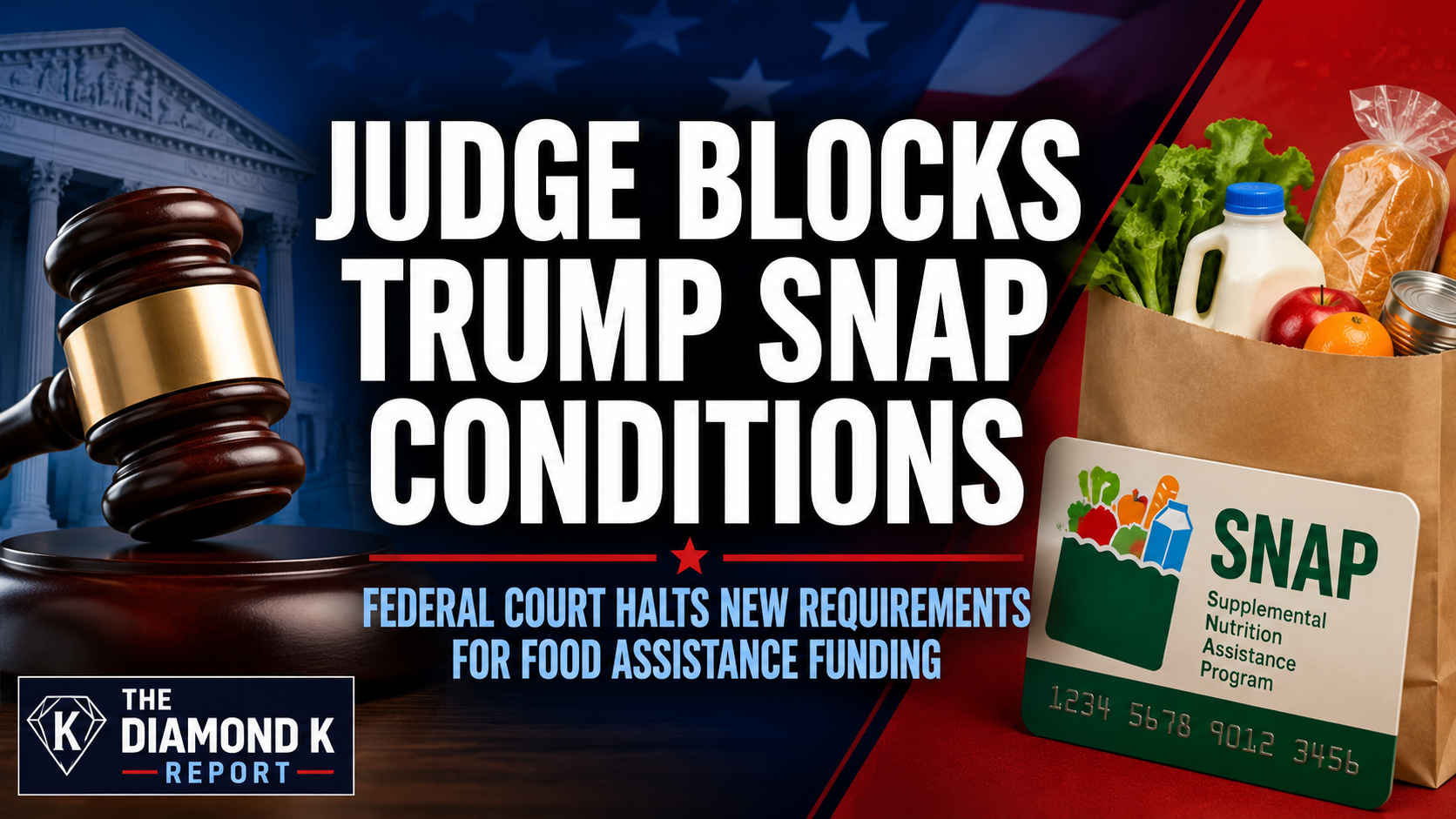
A federal judge has temporarily halted the Trump administration’s effort to impose new conditions on states receiving federal nutrition assistance funding, setting up another major legal battle over the limits of executive power and federal spending.
The ruling, issued by U.S. District Judge Myong Joun in Boston, blocks the U.S. Department of Agriculture from enforcing a series of new requirements that states argued had little to do with feeding low-income Americans and everything to do with advancing the administration’s political priorities.
At the center of the dispute is the Supplemental Nutrition Assistance Program, better known as SNAP or food stamps. The program serves millions of Americans each month and represents one of the nation’s most significant anti-hunger initiatives.
The Trump administration sought to require states receiving USDA funding to certify compliance with a range of federal policy positions, including immigration enforcement measures and policies related to transgender participation in sports. Democratic attorneys general from 20 states challenged the move, arguing that the federal government cannot attach unrelated political conditions to funding that Congress has already approved.
Judge Joun agreed that the states had raised serious legal questions and issued a preliminary injunction, preventing the administration from implementing the requirements while the lawsuit moves forward.
A Fight Over Federal Power
The case goes beyond SNAP benefits alone. State officials warned that the new conditions could potentially jeopardize billions of dollars tied to nutrition programs, school meals, agricultural initiatives, and support for women and children through programs like WIC.
The lawsuit argues that the administration exceeded its authority by attempting to use federal funding as leverage to force states to adopt policies unrelated to the purpose of the programs receiving the money.
Supporters of the administration argue that federal agencies should have broad authority to ensure taxpayer dollars are spent responsibly and that states receiving federal funds should comply with federal priorities.
Critics counter that allowing executive agencies to impose unrelated conditions could create a dangerous precedent, enabling future administrations of either party to use funding as a political weapon.
Why This Matters
For many Americans, SNAP is not a political issue—it’s a lifeline.
The program helps families put food on the table during difficult economic times, assists seniors living on fixed incomes, and provides support to workers whose wages may not keep pace with rising costs. Any disruption to funding could have widespread consequences for communities across the country.
The judge’s decision does not end the legal battle. Instead, it preserves the status quo while courts determine whether the administration’s actions are lawful.
The case is likely to attract national attention because it touches on larger questions about the balance of power between Washington and the states, the limits of executive authority, and the future of federal funding programs.
The Bottom Line
This ruling is another example of the courts serving as a check on presidential power. Whether one agrees with the administration’s policy goals or not, the central legal question remains the same: Can a federal agency require states to comply with unrelated policy demands in order to receive funding that Congress has already authorized?
For now, the answer from this federal court is no.
But with an appeal likely and the lawsuit continuing, the final chapter of this fight has yet to be written.
What do you think? Should the federal government be allowed to attach policy conditions to SNAP funding, or should food assistance remain separate from broader political debates?