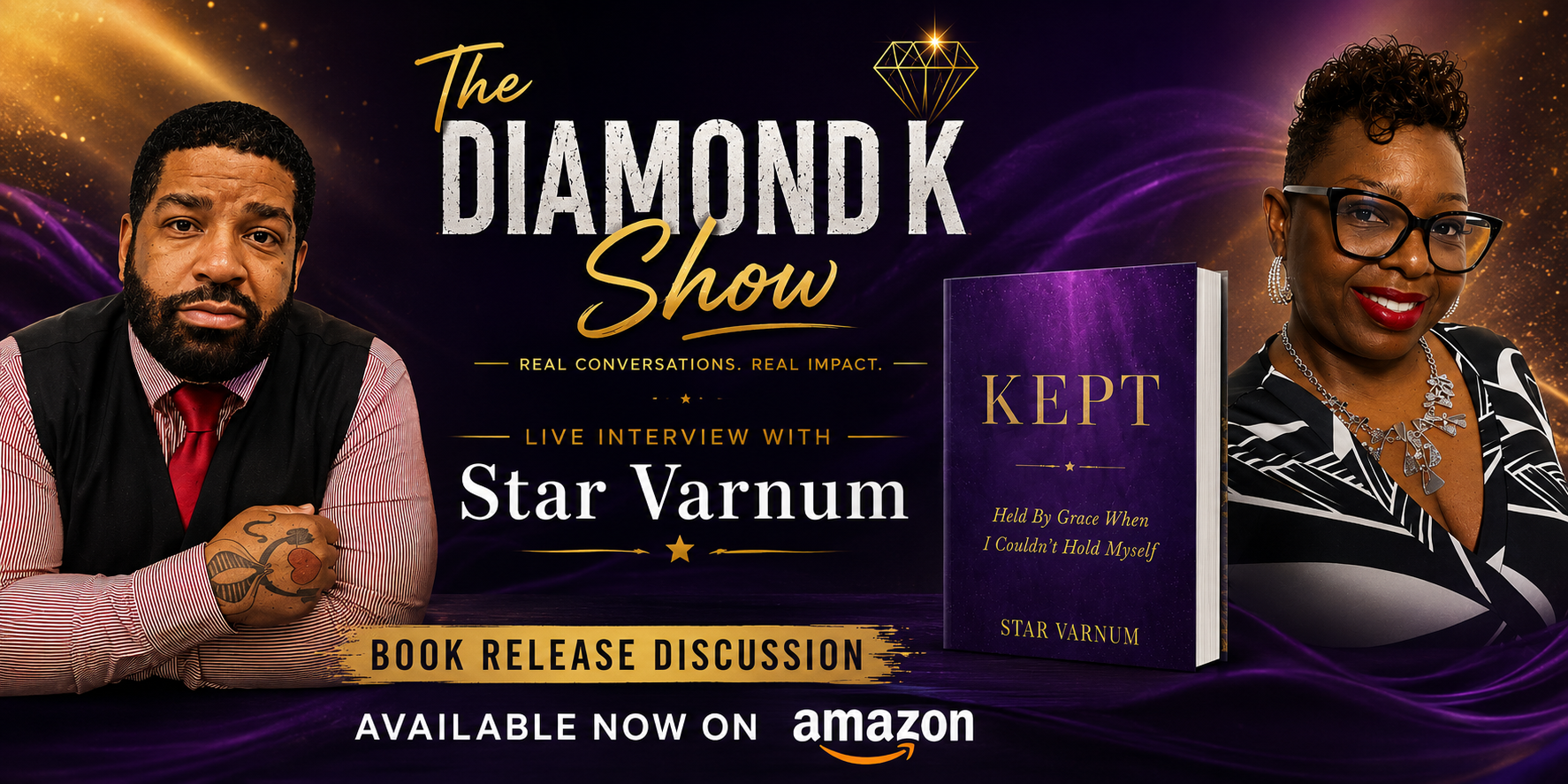
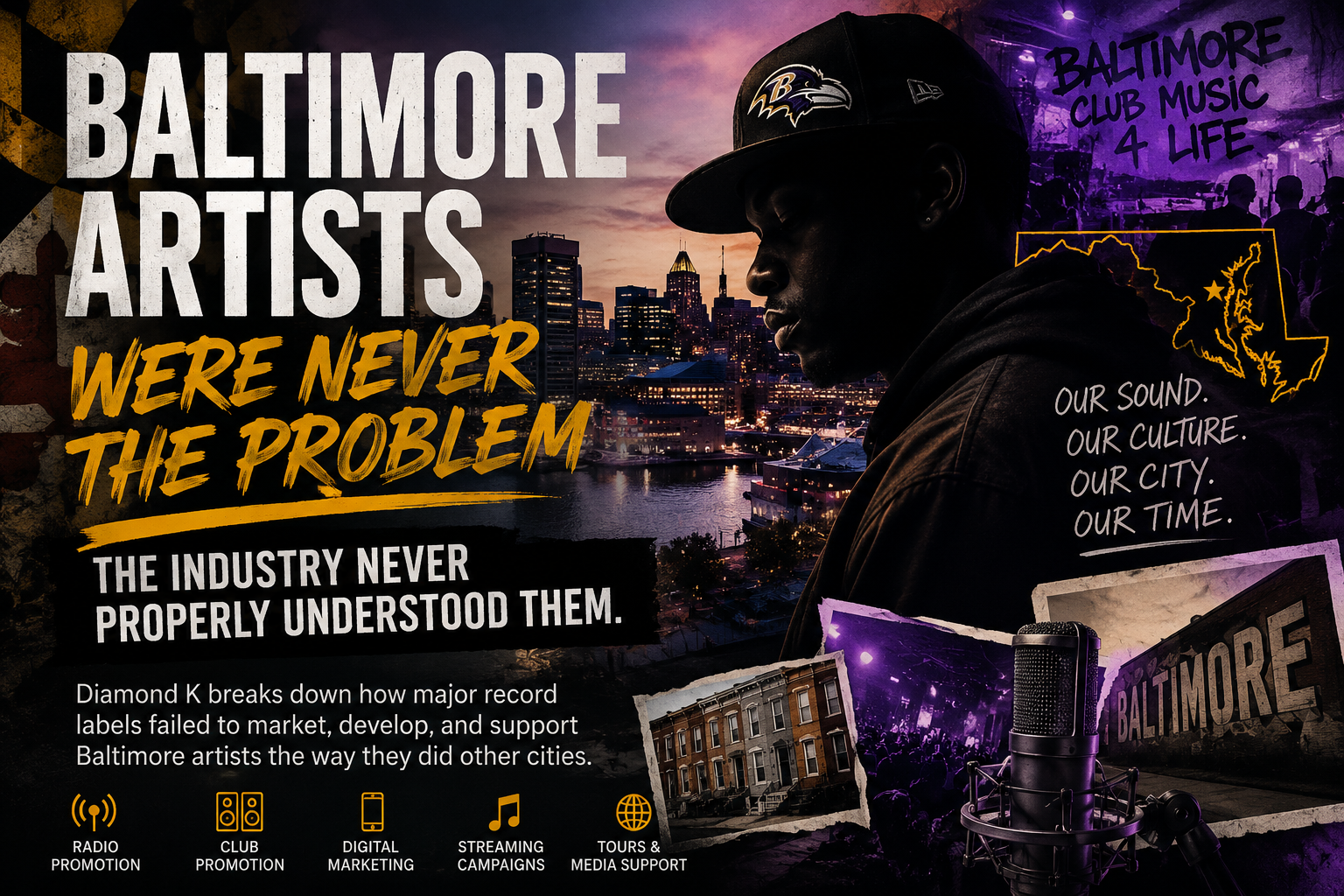
For years, Baltimore has produced talented artists with original sounds, undeniable energy, and authentic culture. Yet despite all of that talent, many Baltimore artists never received the same level of industry success as artists from cities like Atlanta, New York, Houston, Los Angeles, or Miami.
Why?
According to Diamond K, the issue was never a lack of talent. The issue was that major record labels often failed to understand how to properly market Baltimore artists.
The music industry has always relied on formulas. Labels create systems that they believe can consistently produce successful artists. Those systems include radio promotion, digital campaigns, tour support, club marketing, streaming placement, media appearances, branding, and artist development. But historically, many of those systems were designed around larger music markets with more established industry pipelines.
Baltimore never fit neatly into those boxes.
Baltimore Has Always Been Its Own Culture
Baltimore music culture is unique.
The city’s energy, club scene, dance culture, DJ culture, slang, and musical influences have always been different from other regions. Baltimore club music alone became one of the most influential underground sounds in America, influencing producers and artists far beyond Maryland.
But too often, labels attempted to force Baltimore artists into marketing strategies designed for somewhere else.
Some artists were expected to sound more “New York.” Others were pushed toward Southern trends. Some were encouraged to water down what made them unique in the first place.
That approach ignored the reality that regional sounds are often what drive hip-hop innovation.
When Atlanta exploded nationally, labels learned how to market Atlanta artists differently. The same thing happened with Houston, Miami, Memphis, and New Orleans. Each city developed its own ecosystem and eventually the industry adapted.
Baltimore deserved that same level of understanding.
Artist Development Matters — But So Does Patience
Diamond K also points out that artist development is important.
A&R — artist and repertoire — has always been a major part of the music business. Labels traditionally helped artists learn professionalism, media training, performance etiquette, branding, and how to navigate the industry.
A young artist with a hit song may not automatically know how to conduct interviews, network at industry events, or handle sudden fame.
That’s normal.
But too often, Baltimore artists were judged more harshly for imperfections that labels overlooked in artists from other genres and markets.
Rock bands have destroyed hotel rooms and still received massive promotional support. Artists across every genre have dealt with behavioral issues behind the scenes while labels continued investing in their careers.
The industry has historically understood that raw talent sometimes requires guidance and structure.
So the expectation that Baltimore artists needed to already be perfectly polished before receiving support created an unfair standard.
Especially when many of these artists were essentially still kids.
Promotion Is the Label’s Job
Record labels are supposed to build momentum around artists.
That includes:
- Radio promotion
- Club promotion
- Playlist placement
- Press campaigns
- Social media strategy
- Tour support
- Streaming platform marketing
- Brand partnerships
- Video promotion
- Audience development
An artist’s personality flaws or lack of experience should not automatically disqualify them from receiving professional marketing support if the music itself connects with audiences.
According to Diamond K, the industry too often used artist behavior as an excuse instead of doing the work required to properly develop and market Baltimore talent.
Baltimore’s Identity Is Its Strength
Today, the music industry has changed dramatically.
Artists no longer rely entirely on labels to distribute music or build audiences. Platforms like YouTube, TikTok, Instagram, Spotify, and Apple Music allow artists to connect directly with fans.
That independence gives Baltimore artists more control than ever before.
But the core issue remains relevant: Baltimore artists succeed most when their authenticity is embraced instead of reshaped into someone else’s formula.
The city’s sound does not need to imitate another region to matter.
Baltimore already has its own identity.
And understanding that identity may be the key to finally giving Baltimore artists the national recognition many believe they have deserved for decades.
📺 Subscribe to The Diamond K Show YouTube Channel
🌐 Read more on OnFire Broadcasting
🎙️ Follow The Diamond K Show for music industry commentary, Baltimore culture, politics, and hip-hop discussions.