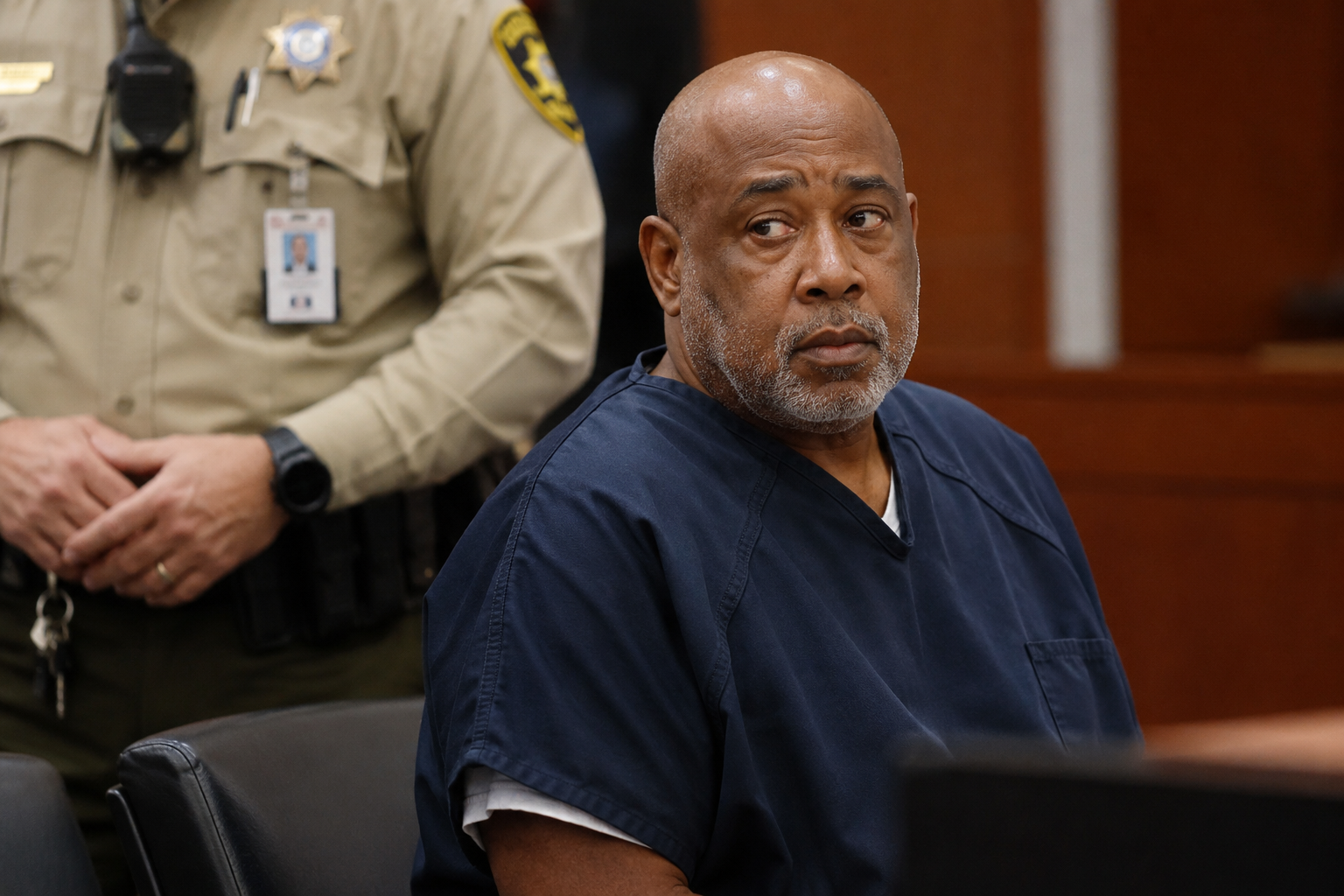

The murder trial of Duane “Keffe D” Davis continues in Las Vegas as prosecutors present Day 3 of witness testimony in the nearly 30-year-old case surrounding the killing of hip-hop icon Tupac Shakur.
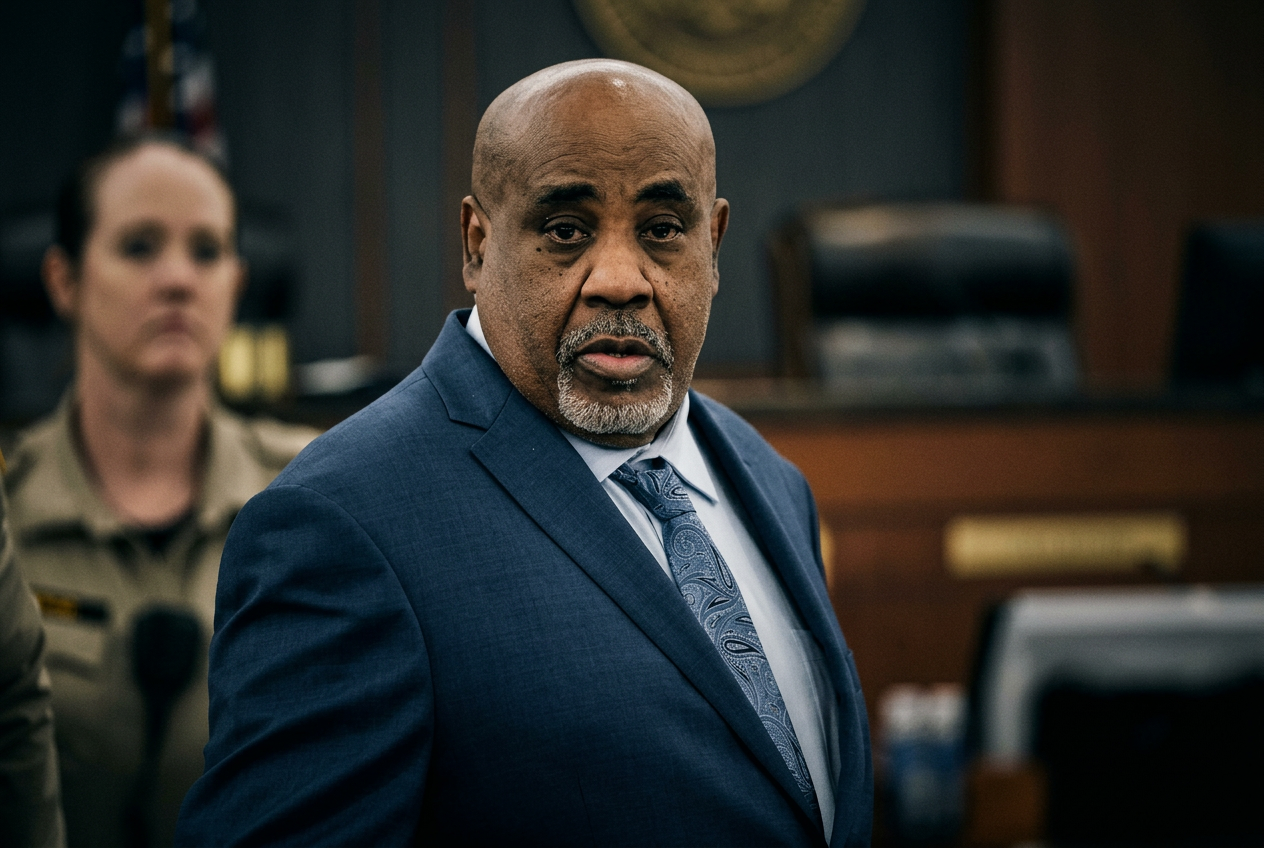
Davis is charged with murder with a deadly weapon in connection with the September 1996 drive-by shooting that ultimately claimed Tupac’s life. Prosecutors allege Davis helped orchestrate the attack following the infamous confrontation at the MGM Grand involving Tupac, members of his entourage, and Davis’ nephew, Orlando “Baby Lane” Anderson. Davis has pleaded not guilty and maintains that statements he made over the years about the shooting should not be taken as reliable admissions.
On Day 3, former FBI Special Agent Wade Lee took the stand. Lee testified about his work investigating gangs in South Central Los Angeles and Watts and his previous dealings with Davis, including arresting him on drug-trafficking charges in the late 1990s. Lee said Davis was known as a person of interest in Tupac’s murder, although Lee’s investigation at the time centered on gang activity rather than the Shakur homicide.
The testimony follows an emotional Day 2 in which jurors heard from witnesses connected to the shooting and Death Row Records. Prosecutors also presented evidence concerning Tupac’s fatal injuries, including autopsy photographs that prompted some members of the Shakur family to leave the courtroom.
As the state continues building its case, one of the central questions remains: Can prosecutors prove beyond a reasonable doubt that Keffe D was a key participant in the plot to kill Tupac—even though they do not allege that he pulled the trigger?
Follow The Diamond K Show / OnFire Broadcasting for continuing coverage and analysis of NV v. Duane “Keffe D” Davis as one of hip-hop’s most infamous unsolved killings finally plays out before a jury.

NV v. Duane ‘Keffe D’ Davis — Day 2 | The Tupac Murder Trial
Nearly 30 years after Tupac Shakur was gunned down in Las Vegas, prosecutors are finally presenting their case to a jury. At the center of it all is Duane “Keffe D” Davis — and the words he has spoken about Tupac’s murder for years.
The murder of legendary rapper Tupac Shakur remained unsolved for nearly three decades.
Then, in 2023, investigators made the biggest break in the case: Las Vegas police arrested Duane “Keffe D” Davis, the only person ever charged in connection with Tupac’s killing.
Now, in August 2026, Davis is sitting in a Las Vegas courtroom as prosecutors attempt to prove that he helped orchestrate one of the most infamous murders in music history.
And as Day 2 of NV v. Duane Davis unfolds, one thing is becoming increasingly clear:
This case may ultimately be decided by Keffe D’s own words.
WHAT HAPPENED TO TUPAC?
On September 7, 1996, Tupac attended the highly anticipated Mike Tyson–Bruce Seldon heavyweight boxing match at the MGM Grand in Las Vegas.
After the fight, Tupac and members of his entourage were involved in a confrontation inside the MGM Grand with Orlando “Baby Lane” Anderson, a member of the South Side Compton Crips and Keffe D’s nephew.
Security cameras captured Tupac and others attacking Anderson.
That confrontation is critical because prosecutors say it provided the motive for what happened next.
Later that night, Tupac was riding in the passenger seat of a black BMW driven by Death Row Records co-founder Marion “Suge” Knight.
While the BMW was stopped near the Las Vegas Strip, a white Cadillac pulled alongside it.
Gunfire erupted.
Tupac was struck multiple times.
Knight was wounded but survived.
Tupac was rushed to the hospital and died six days later on September 13, 1996.
He was only 25 years old.
PROSECUTORS SAY IT WAS REVENGE
Prosecutors allege that the shooting was retaliation for the MGM Grand beating of Orlando Anderson.
Their theory is not that Keffe D personally pulled the trigger.
Instead, the state alleges Davis played a central role in organizing the retaliation and providing the weapon used in the attack.
That distinction is important.
The prosecution does not necessarily have to convince jurors that Keffe D fired the shots. Their case is that he knowingly participated in the plan that resulted in Tupac’s death.
And much of the evidence supporting that theory comes from an unusual source:
Keffe D himself.
THE 2008 INTERVIEW COULD BECOME CRITICAL
Years after Tupac’s death, Davis participated in a confidential 2008 interview with investigators.
In that interview, Davis discussed what happened on the night Tupac was shot.
Before trial, the defense fought to prevent prosecutors from using the recording.
The argument was significant because Davis had participated in the interview under circumstances his attorneys contended protected what he told investigators.
But Judge Carli Kierny ruled that the recording could be admitted at trial.
That decision gave prosecutors access to potentially one of the most powerful pieces of evidence in the case:
Keffe D telling the story in his own voice.
Jurors began hearing portions of Davis’s recorded statements during the opening day of testimony.
THEN CAME THE BOOK
The 2008 interview wasn’t the last time Keffe D talked publicly about Tupac’s murder.
In 2019, Davis released the memoir Compton Street Legend.
In the book, Davis described being inside the Cadillac involved in the shooting and discussed obtaining a handgun before the attack.
His public interviews and media appearances would further bring attention to his account of what happened that night.
Those statements eventually helped revive interest in a case that had remained officially unsolved for decades.
Now prosecutors are attempting to use those same words against him.
THE DEFENSE HAS A VERY DIFFERENT EXPLANATION
Keffe D’s defense is attacking the credibility of the stories that made him famous.
Defense attorney Michael Sanft essentially told jurors that Davis talks too much.
The defense argues that Keffe D embellished stories about his criminal past and Tupac’s murder for money, notoriety and entertainment.
In other words:
Just because Keffe D said something doesn’t mean it happened.
That creates a fascinating problem for prosecutors.
They have a defendant who has repeatedly discussed the crime.
But they still have to prove that those statements are truthful.
A confession sounds powerful.
An exaggerated story told by someone trying to sell books or attract media attention is something very different.
The jury will have to decide which one they’re hearing.
DAY 1 ESTABLISHED THE BATTLE LINES
Opening statements made the competing theories clear.
Prosecutors described Tupac’s killing as an act of revenge following the MGM Grand confrontation.
The defense challenged the reliability of Keffe D’s statements while emphasizing the weaknesses created by a case that sat unresolved for nearly three decades.
There are witnesses who have died.
Memories have faded.
Evidence has disappeared.
And investigators never recovered the murder weapon.
There is also no DNA, fingerprint or traditional forensic evidence publicly known to place Keffe D inside the Cadillac.
That means prosecutors must build their case through witness testimony, circumstantial evidence and Davis’s own statements.
AN OFFICER DESCRIBED HIS FINAL INTERACTION WITH TUPAC
One of the first witnesses was retired Las Vegas Metropolitan Police officer Garry Dale.
Dale testified that he encountered Tupac and Suge Knight shortly before the shooting when he stopped their BMW because it did not have a visible license plate.
He later responded after the shooting.
Dale testified that Tupac was still able to communicate while being transported for medical treatment.
According to Dale, when he attempted to get information about who was responsible, Tupac indicated that they would handle the situation themselves.
The testimony offered jurors a rare glimpse into the chaotic minutes immediately following the shooting.
AN EYEWITNESS TAKES THE STAND
Jurors also heard from Ingrid Stokes, who was driving near Tupac and Suge Knight on the night of the shooting.
Her testimony helped reconstruct the movement of vehicles around the BMW before gunfire erupted.
But there was an important limitation.
Stokes could not identify the shooter.
That illustrates one of the biggest challenges prosecutors face almost 30 years later.
Witnesses may be able to reconstruct pieces of the night.
But connecting those pieces directly to Keffe D is another matter.
WHY DAY 2 MATTERS
As Day 2 continues, prosecutors are moving deeper into the evidence that they hope will connect Keffe D to the conspiracy surrounding Tupac’s death.
The prosecution needs more than a famous story.
It needs corroboration.
If prosecutors can independently verify important details contained in Keffe D’s interviews and memoir, his statements become significantly more damaging.
But if the defense can demonstrate inconsistencies, exaggerations or details that cannot be independently confirmed, jurors may begin questioning whether Keffe D’s stories are reliable enough to convict him of murder.
That is why every witness matters.
Every document matters.
Every interview matters.
And every contradiction matters.
DID KEFFE D TALK HIMSELF INTO A MURDER CONVICTION?
That may ultimately become the defining question of this trial.
For decades, the Tupac murder existed in a strange space between criminal investigation and hip-hop mythology.
There were documentaries.
Books.
Interviews.
Street stories.
Conspiracy theories.
And endless speculation about who was responsible.
Keffe D became one of the most recognizable voices discussing what allegedly happened.
Now he’s discovering the potential consequences of that visibility.
The stories that once made him a central figure in documentaries and interviews are being presented to a jury in a murder trial.
Prosecutors want jurors to believe Keffe D spent years telling the truth because he never expected to be prosecuted.
The defense wants them to believe he was selling an image.
The difference between those two possibilities could mean the difference between freedom and spending the rest of his life behind bars.
THE CASE IS FAR FROM OVER
It’s important not to treat the prosecution’s allegations as established fact.
Duane “Keffe D” Davis has pleaded not guilty and is presumed innocent unless and until the state proves its case beyond a reasonable doubt.
We’re only at Day 2.
There is still extensive testimony and evidence to come.
But after nearly three decades of mystery surrounding Tupac Shakur’s murder, the story has finally moved somewhere it has never been before:
In front of a jury.
And this time, Keffe D isn’t telling the story for a book, documentary or interview.
He’s listening as prosecutors tell it for him.
Diamond K will continue covering NV v. Duane “Keffe D” Davis and the Tupac Shakur murder trial as testimony unfolds.
Subscribe to the Diamond K Report for continuing trial coverage, analysis and updates.
🚨 TUPAC TRIAL UPDATE — NEW DAY 1 EVIDENCE
There is a meaningful development from this afternoon’s proceedings. Jurors were played portions of Duane “Keffe D” Davis’s 2008 interview with investigators—bringing Davis’s own recorded statements directly into the trial on Day 1.
Also significant: retired Las Vegas homicide detective Brent Becker testified by video, adding testimony from one of the original investigators of Tupac Shakur’s 1996 killing.
Earlier eyewitness Ingrid Stokes gave a detailed reconstruction of the moments immediately before the gunfire. She testified that her convertible pulled alongside Tupac and Suge Knight’s BMW and later moved ahead of them. When the shooting began, she heard gunfire but could not identify the direction of the shots or anyone inside the suspect vehicle. Under cross-examination, the defense challenged the reliability of memories reconstructed nearly 30 years later.
_________________________________________________________________________________________________________
Nearly 30 years after Tupac Shakur was fatally shot on the Las Vegas Strip, a jury is finally hearing evidence in the murder case.
The trial of Duane “Keffe D” Davis began Monday, August 17, 2026, in Las Vegas, with prosecutors and the defense presenting dramatically different versions of what Davis’s own words mean.
Davis, 63, has pleaded not guilty. He is not accused of personally firing the shots that killed Tupac. Instead, prosecutors allege that Davis helped organize the attack and supplied the gun used in the shooting.
PROSECUTION: THIS WAS REVENGE
Chief Deputy District Attorney Binu Palal presented the September 7, 1996 shooting as an act of retaliation.
Hours before Tupac was shot, Tupac and members of his entourage were involved in an altercation with Orlando “Baby Lane” Anderson, Davis’s nephew, inside the MGM Grand.
Prosecutors contend that Davis responded to the beating by helping organize a search for Tupac and Suge Knight.
The state’s case is unusual because some of its most important evidence may come from Davis himself.
Over the years, Davis discussed the night Tupac was shot in interviews, conversations with investigators and his 2019 memoir Compton Street Legend. Prosecutors intend to use those statements to argue that Davis admitted his participation in the events leading to the shooting.
The prosecution does not have to prove that Davis personally pulled the trigger to pursue its theory that he was criminally responsible for the killing.
DEFENSE: KEFFE D WAS SELLING A STORY
Defense attorney Michael Sanft attacked the reliability of Davis’s previous statements.
The defense’s position is essentially that Davis’s storytelling should not be confused with proof beyond a reasonable doubt.
Sanft argued that Davis embellished or fabricated stories about Tupac’s murder for attention and financial benefit.
That sets up what could become the central question of the trial:
Were Keffe D’s statements genuine admissions—or exaggerated stories that prosecutors are now treating as confessions?
The defense also emphasized problems created by the age of the case, including missing evidence, unavailable witnesses and questions surrounding the original investigation.
FIRST WITNESS: FORMER LVMPD OFFICER GARRY DALE
The prosecution’s first witness was retired Las Vegas Metropolitan Police officer Garry Dale.
Dale testified that he was working with LVMPD’s bike team on September 7, 1996.
Before the shooting, Dale said he stopped the black BMW carrying Tupac and Death Row Records co-founder Marion “Suge” Knight because the vehicle did not have a visible license plate.
According to Dale, he told them to put the license plate back on the vehicle and allowed them to leave.
He did not write a report about the encounter.
Later that night, Dale heard the shots-fired call and responded.
Tupac had been shot multiple times while riding in the passenger seat of Knight’s BMW.
Dale testified that Knight was demanding that officers help Tupac.
The officer then accompanied the wounded rapper in the ambulance.
WHAT DID TUPAC SAY?
Dale’s testimony produced one of Day 1’s most striking moments.
He testified that Tupac was still capable of speaking after the shooting.
Dale said he asked Tupac who was responsible.
According to Dale, Tupac responded:
“No, we’ll take care of it.”
Dale testified that Tupac repeated the response.
The testimony provides jurors with an account of Tupac’s condition immediately after the shooting while also illustrating one of the difficulties investigators faced from the beginning.
SECOND WITNESS
The prosecution next called Ingrid Stokes, whose last name was Johnson in 1996.
Her appearance moved the state’s case from opening arguments into the process of reconstructing the events surrounding the shooting through witnesses who were in Las Vegas that night.

WHY DAY 1 MATTERS
Day 1 revealed the battlefield for this entire trial.
The prosecution wants jurors to believe that Keffe D repeatedly told the truth about his involvement when he thought he would never face prosecution.
The defense wants jurors to believe the opposite: that Davis became a storyteller who exaggerated his connection to one of the most infamous murders in music history.
That distinction is enormous.
A man bragging about a notorious crime is one thing.
Proving beyond a reasonable doubt that he participated in that crime is another.
After nearly three decades of rumors, documentaries, interviews, books and conspiracy theories surrounding Tupac’s murder, a jury will now have to separate the mythology from admissible evidence.
And for Duane “Keffe D” Davis, the words he has spoken about Tupac’s murder for years may ultimately become some of the most important evidence against him.
The Diamond K Show will continue following NV v. Duane Davis as testimony unfolds.