Wisconsin voters headed to the polls Tuesday for a closely watched gubernatorial primary that could help determine which direction Democrats take heading into the 2026 midterm elections.
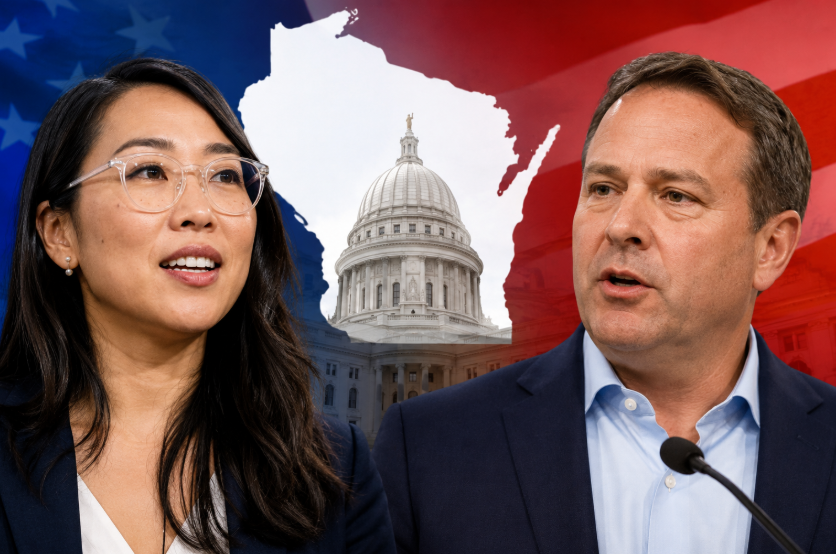
The Democratic contest has attracted national attention because of the rise of state Rep. Francesca Hong, a Madison-area lawmaker and democratic socialist who has emerged as the frontrunner.
Hong faces Milwaukee County Executive David Crowley, state Sen. Kelda Roys and former Wisconsin Department of Administration Secretary Joel Brennan among the active Democratic candidates.
Hong’s campaign has emphasized progressive policies including expanded childcare programs, increased social spending and other proposals designed to significantly expand the role of state government. Her support among younger and more progressive Democratic voters has helped transform what was once a wide-open gubernatorial contest into a national political story.
Crowley has attempted to consolidate Democrats looking for a more moderate alternative. Outgoing Democratic Gov. Tony Evers has backed Crowley, adding establishment support to Crowley’s late push for the nomination.
Recent polling nevertheless showed Hong holding a substantial advantage. A Marquette University Law School poll put Hong at 38% among Democratic primary voters, compared with 7% for Crowley. When undecided voters were pressed to select a candidate, Hong increased to 46% and Crowley to 11%.
The race has become bigger than the candidates themselves.
A Hong victory would provide progressives with another example of their ability to defeat or bypass traditional Democratic establishment candidates. A Crowley victory would demonstrate that questions about general-election electability still carry significant weight with Democratic primary voters in competitive states.
Wisconsin is especially important because of its status as one of the country’s most competitive political battlegrounds. Reuters described Tuesday’s Wisconsin contest as part of a broader test of progressive energy inside the Democratic Party.
On the Republican side, U.S. Rep. Tom Tiffany faces Andrew “Andy” Manske for the gubernatorial nomination. Ballotpedia lists both candidates in Tuesday’s Republican primary.
Tiffany enters the race with significant advantages, including the endorsement of President Donald Trump, and is widely viewed as the favorite for the nomination.
Whoever emerges from the Democratic primary could therefore enter a highly competitive general-election campaign against Tiffany.
The November 3 election will determine who succeeds Gov. Tony Evers and could have significant consequences for abortion policy, education funding, taxes, labor policy, voting rules and the balance of political power in Wisconsin.
But first Democrats must answer their own question:
Do they believe the road to winning Wisconsin runs through a stronger progressive message—or through a candidate positioned closer to the political center?
Tuesday’s results may provide an answer.