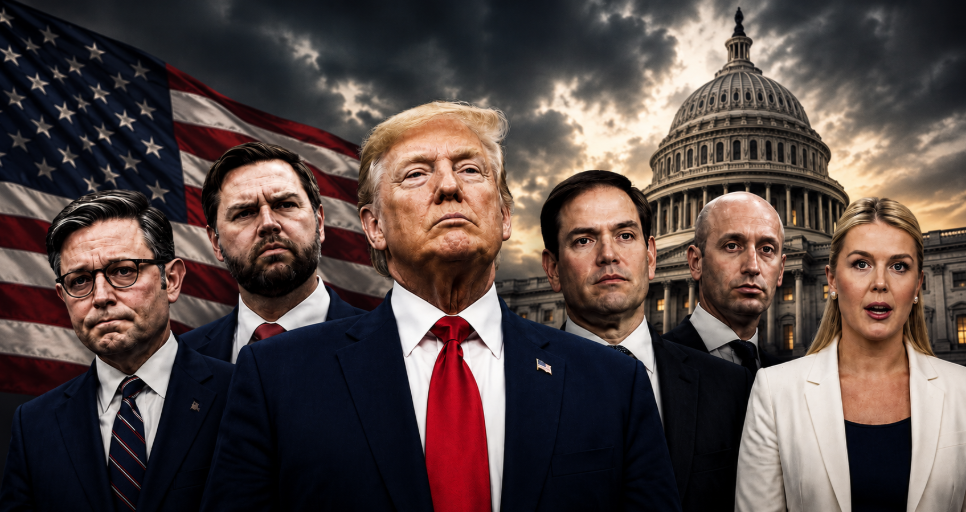
A political graphic circulating online argues that President Donald Trump is “not the only problem,” asserting that Republican elected officials who refuse to challenge him share responsibility for the direction of the party.
The message reflects a broader argument made by many Trump critics: that congressional Republicans, governors, and party leaders have largely aligned themselves with Trump’s agenda, even when they privately disagree with him. Critics contend that this dynamic has reduced internal dissent within the Republican Party and concentrated political influence around Trump.
Supporters of Trump reject that framing. They argue Republican officials are carrying out the agenda voters elected them to implement and that party unity is appropriate after Trump’s electoral victories. Many conservatives also maintain that Republicans who publicly oppose Trump often do so for political or ideological reasons rather than principle.
Recent debates in Congress have highlighted tensions within the GOP, with disagreements over legislation and strategy occasionally surfacing despite overall support for the president.
The discussion raises a broader political question that extends beyond one individual: How much responsibility belongs to party leadership collectively versus a single political figure?
As the 2026 election cycle continues, that question is likely to remain central to debates over the future of the Republican Party.