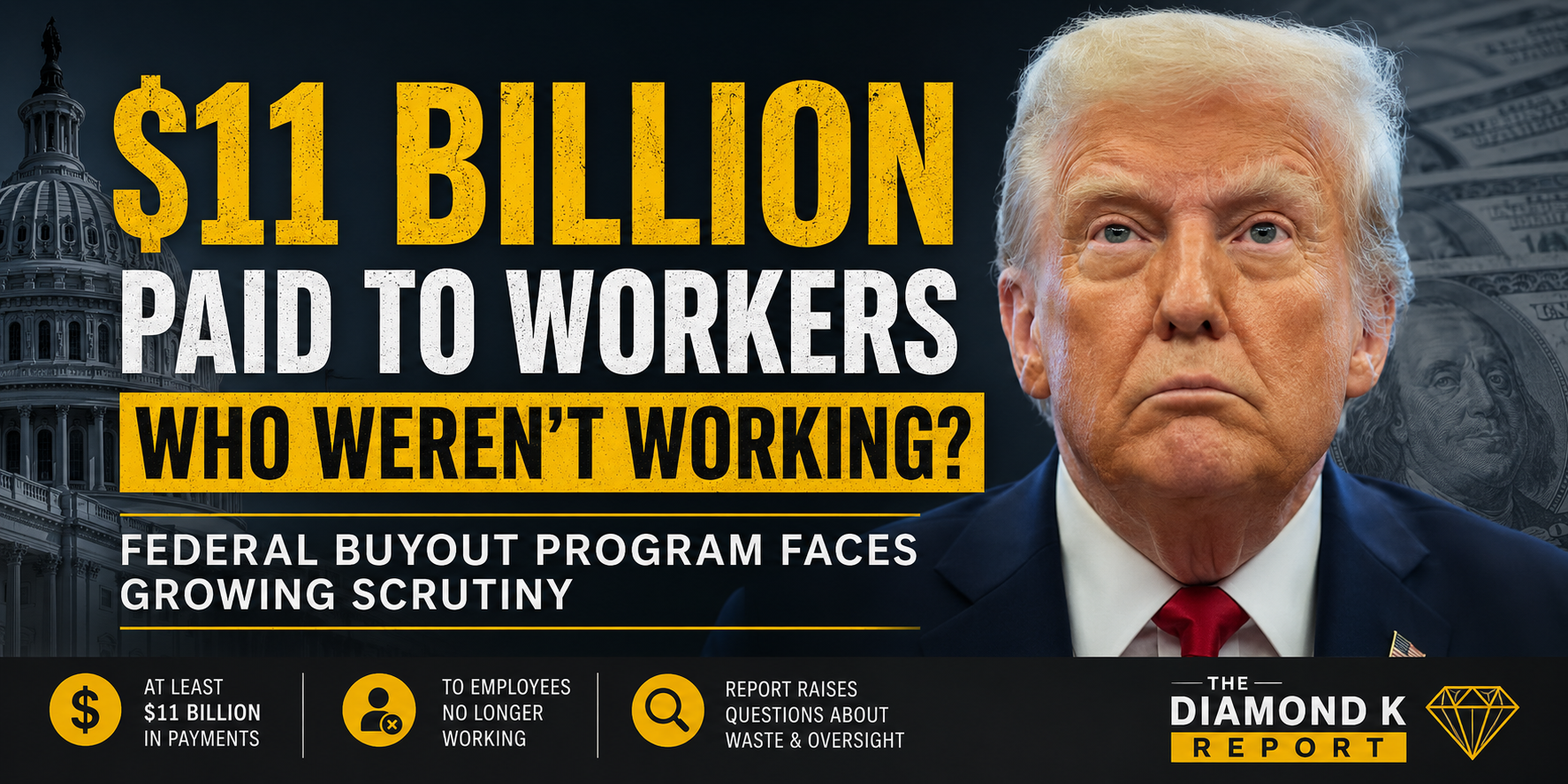
A new report estimating that federal agencies paid at least $11 billion to employees who were no longer actively working is fueling a fierce debate over government spending, workforce reductions, and taxpayer accountability. The report, highlighted by Bloomberg Law, focuses on buyout and deferred resignation programs that allowed federal employees to leave their positions while continuing to receive compensation for a period of time. While supporters describe the initiative as a strategic effort to reduce the size of government without mass layoffs, critics argue it represents a troubling example of wasteful spending. At the center of the controversy is a simple question: Should taxpayers be responsible for paying billions of dollars to workers who are no longer performing government duties? Supporters of the buyout strategy say the answer is not as straightforward as critics suggest. They argue that workforce reductions in the federal government are often complex, involving civil service protections, union agreements, and lengthy legal procedures.
According to this view, offering buyouts can be a more efficient and less disruptive way to shrink government agencies than conducting large-scale layoffs. Advocates also point out that reducing the federal workforce could potentially generate long-term savings that outweigh the upfront costs of buyout programs. If agencies permanently eliminate positions and reduce payroll obligations, the initial investment may ultimately save taxpayers money over time. Critics, however, remain unconvinced. For many observers, the headline figure of $11 billion raises concerns about how government agencies manage public funds. Opponents argue that paying employees after they have stopped working sends the wrong message at a time when Americans continue to face economic pressures, rising costs, and concerns about federal deficits. The issue is likely to become a political flashpoint in Washington. Fiscal conservatives are expected to demand greater transparency about how the funds were spent and whether agencies properly justified the costs.
Meanwhile, supporters of federal workforce reforms may argue that the program represents a necessary step toward creating a leaner government. The debate also highlights a broader challenge facing policymakers: balancing efficiency with fairness. Government leaders often face difficult choices when restructuring agencies or reducing staffing levels. Programs designed to avoid abrupt layoffs may carry significant costs, while more aggressive reductions can create legal battles, workplace disruption, and public backlash. As lawmakers and watchdog groups examine the report’s findings, one thing is clear: the controversy extends far beyond a single dollar figure. The discussion is ultimately about trust. Americans want to know whether government programs are being managed responsibly and whether taxpayer dollars are producing measurable results. Whether the buyout initiative is remembered as a smart long-term investment or an expensive misstep may depend on what future investigations reveal. Until then, the reported $11 billion figure is likely to remain at the center of a heated national conversation about government efficiency, spending priorities, and accountability.
What Do You Think? Was paying employees to leave their jobs a practical way to reduce the size of government, or does the report reveal a serious misuse of taxpayer funds? Leave a comment and join the conversation.